


You’re a high performer. You do the work. You show up. You deliver results. And yet somehow, someone else just got the promotion.
It’s one of the most frustrating experiences in a career – watching someone less qualified move up simply because they were more visible. And staying quiet because you don’t want to come across as arrogant or self-serving.
Here’s the thing. Self promotion at work isn’t about bragging. It’s about making sure the right people know the impact you’re already making. And there’s a way to do it that feels confident, not cringe-worthy.
This question came up during one of my Overwhelm Culprit™ workshops – specifically around the Lack of Confidence culprit:
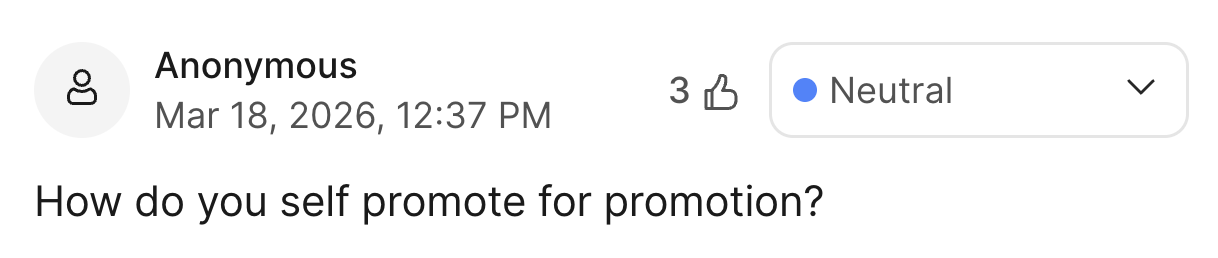
In this post, I’m sharing the exact three-part framework I use with my coaching and advisory clients to help them secure a promotion without feeling like they’re bragging.
The Truth About Self Promotion at Work
The biggest mistake high performers make is believing their work will speak for itself.
It won’t. Your work gets you credibility. Visibility is what gets you promoted.
And here’s a stat that might surprise you: nearly half of all workers have made it known they don’t even want promotions. So by simply being vocal and visible about your desire to advance, you already have a major competitive advantage.
If people don’t know the impact you’re making, they can’t reward you for it. That’s not unfair. That’s just how it works. And once you accept that, self promotion at work stops feeling like bragging and starts feeling like strategy.
The 150% Role: Know This Before You Pursue a Promotion
Before you start going after a promotion, there’s something important to understand. It’s called the 150% role.
The idea is this: you need to know 100% of your current role and 50% of your boss’s role before anyone will give you that next title. If you want your boss’s job, you need to already be doing about half of it.
So if your boss runs meetings, you should be leading some already. If they manage stakeholders, you should be raising your hand for cross-functional work. If they own certain relationships, you should be starting to build yours.
If you’re sitting there thinking “I’m already doing all of this” – then the issue usually isn’t the work. It’s that you’re not making it visible in a way that decision makers can actually see and use.
The Self Promotion at Work Framework: Data, Communication, Visibility
Here’s the three-part framework I walk my clients through whenever they’re working toward a promotion. Each part builds on the last – and together, they make self promotion feel grounded, not arrogant.
Part 1: Data — Build the Proof Before You Make the Case
Before you say a word about wanting a promotion, you need data. Not just what you did — but the impact of what you did.
Start tracking things like:
How much revenue have you generated?
How much time have you saved?
What specific problems have you solved?
What team or business outcomes have improved because of your contribution?
Document your wins as they happen:
Screenshot compliments. Save emails. Create files with measurable results. Build the case in real time – not the night before a performance review. Because here’s the reframe that changes everything: it’s not bragging if it’s proven data. Simone Biles said it best. When asked why she wasn’t afraid to call herself the best gymnast in the world, she said it wasn’t cockiness – it was facts on paper. Five world titles. Undeniable results.
That’s exactly what we’re building here. When you communicate from a place of proven data, you’re not bragging. You’re presenting facts.
One more thing to add to your data collection – research similar roles at other companies:
Look at what they pay, what the requirements are, and what the benefits look like. You don’t need to apply – unless you want to. But this gives you a clear, objective picture of your market value before you walk into any conversation about a promotion.
Part 2: Communication — Make Your Impact Known
Now that you have the data, it’s time to start communicating it. This is where so many high performers fall short — they do the work but stay quiet about it.
Here’s what to start doing:
Speak up in meetings. When you’ve contributed to a project or outcome, say so. Don’t let it go unattributed.
Share your desire to advance during one-on-ones. Say something like: “I’d like to grow into X role. Can we define what success looks like for me to be considered?”
Be proactive – don’t wait for your boss to bring it up. Request time in your next one-on-one specifically to discuss your career progression.
Volunteer for projects that stretch you into your boss’s skillset – keep growing that 150%. Ask directly: “What specific results would I need to demonstrate over the next three to six months to be considered for a promotion?” Then go document those results.
You have to advocate for yourself. No one else will do it for you – and that’s not a pessimistic take. It’s just reality. The good news is that advocating for yourself gets a lot easier when you have the data to back it up.
Part 3: Visibility — Be Seen by the Right People
Visibility isn’t about being everywhere. It’s about being seen by the right people in the right context.
Here’s how to build strategic visibility:
Secure a sponsor – not just a mentor. A mentor gives advice. A sponsor brings your name up in rooms you’re not in. That’s the person who can actually move the needle on your promotion. Attend meetings and events that give you access to decision makers. Start building real relationships – not just surface-level connections.
Show up at industry association events and conferences. This builds visibility both within your organization and across your field.
Dress for the role you want – not the one you have. Whether you’re in person, virtual, or hybrid, how you present yourself matters. People notice.
Consider applying to similar roles at other organizations. This increases your visibility in your industry and gives you options – because a promotion is never guaranteed, no matter how ready you are.
Self Promotion at Work Starts With Believing You Deserve It
Here’s what I want you to remember: this framework isn’t just strategy. It’s a confidence builder. Because if you don’t believe you deserve the next level, you won’t be able to advocate for it – even if you’re already operating there. The data, the communication, the visibility – they all give you the foundation to stand behind what you’re asking for.
Self promotion at work isn’t arrogance. It’s leadership. And it starts with recognizing that if people don’t know what you’re capable of, that’s not their fault – it’s an opportunity for you to show them.
Find Out Which Overwhelm Culprit™ Is Holding You Back
If you’re a high performer who knows you’re ready for the next level but can’t seem to get there, there’s usually one of five culprits quietly running the show. Lack of Confidence is one of the most common ones I see – and it shows up in exactly this way: doing all the work but staying invisible.
Take the free Overwhelm Culprit™ Quiz to find out which one is holding you back. Six questions. Three minutes. A clear next step.
Take the free Overwhelm Culprit™ Quiz here.
Go Deeper With the Book
I cover the Lack of Confidence culprit in full detail in my book – including even more strategies for visibility, self-advocacy, and stepping into the leadership roles you’re already ready for. The Five Overwhelm Culprits™: Strategies to Save Your Sanity Without Sacrificing Your Success is available now at your favorite book retailer or at the link below.
This is the book for the high-performing woman who is done being overlooked – and ready to lead from the front.
CLICK FOR TRANSCRIPT
[00:00:00] How do you self-promote for promotion? This is a question I received during a recent private event Q&A, and I realized it’s a great topic to cover here since so many people, especially women, don’t advocate for their own promotion because they’re afraid of being seen as bragging. And because of that they stay stuck watching other people get promoted who aren’t necessarily better, but just more visible.
If you’re currently a high performer who is well positioned to take the next step in your career, but are unsure of exactly how to make it known that you want a promotion, then stick around because by the end of this episode, you’ll know exactly what to stay and do to get that promotion that you’re looking for.
If you’re new here, my name is Corrie LoGiudice, otherwise known as Corrie Lo, and I’m a professional keynote speaker, facilitator, executive advisor, and author who helps leaders transform overwhelm into confident action even in times of crisis.
This question came up as part of a workshop audience Q&A, as [00:01:00] part of one of my Overwhelm Culprit™ workshops, and this was surrounding the culprit of lack of confidence.
The biggest mistake I see high performers make is that they’re thinking that their work speaks for itself.
It doesn’t, your work gets you credibility, but visibility is what gets you promoted. The ironic part about this is statistics show that nearly half of all workers have made it known that they don’t even want promotions. So by being vocal and visible, you have a really great shot at winning the opportunity.
One thing to be aware of before you go about trying to secure a promotion is something called the 150% role, and that’s that you should know a hundred percent of your role and 50% of your boss’s role in order to get that role.
So if you want your boss’s job, you need to be able to demonstrate that you can already do about 50% of that job already before anyone gives you that title.
So if your boss runs meetings, you should be leading some already on your own or [00:02:00] if they manage stakeholders, you should be throwing your hat in the ring to start doing some cross-functional work. If you’re sitting here thinking, But I’m doing all of this”, here’s what it usually breaks down to. You are doing the work, but you’re not making it visible in a way that decision makers could actually use it.
So I’d love to know, do you want a promotion, but you’re unsure of how to promote yourself for it? Go ahead and comment below and let’s try to help each other figure out the best strategy to win it.
So when I work with coaching and advisory clients who are interested in securing a promotion, I walk them through a three part framework. That consists of data, communication and visibility. So let’s break down what each of one of those are and what you should be doing for each of them.
So data. You should be before you are starting to go out there and try to secure a promotion. Collecting data and tracking not just what you did. You wanna be tracking your impact. So we wanna look at things like how much revenue have you generated? How much time have you saved? What [00:03:00] problems have you solved specifically and what team outcomes have improved? You want it to be measurable. And from there you’re gonna also wanna be documenting those wins. So things that you could do, you can screenshot things like compliments that you receive from people on the results of whatever project you’re working on. You could create files and include all the data, whether it be like spreadsheets or word documents. But it’s your job to actually document these things when they happen.
So having this data is actually gonna help with the next two steps because it’s not bragging if it’s proven data. As shown by, the goat, Simone Biles. She had once said, and this was a quote on why she was not afraid to call herself the best. That “It’s not outta cockiness, I’ve won five world titles, and if I say I’m the best gymnast there is. Other people’s reaction is, oh, she’s just cocky. Look at her now. But no, the facts are literally on paper.” So Simone knows that her results back it up. And that’s [00:04:00] what we’re trying to help you accomplish by having data on your specific performance and impact. Because when you’re going out there you’re gonna communicate and you’re gonna become visible about that impact you are doing so from a place of proven fact through the data.
All right. You’ll also get bonus points if this data proves that you fit that 150% rule. So you really wanna start to be looking for different ways that your impact fits within the 50% of what your boss is already doing. The other part of data that you wanna be looking for is start searching for opportunities at other companies to do the work it is that you wanna be doing.
Doesn’t necessarily mean that you need to apply, unless you want to but you wanna look for things like what do they pay? what are the job requirements? What are the benefits? Because this ultimately helps you understand the market objectively as well as your value for when it’s time to position that value when you are communicating as well as becoming visible for the promotion [00:05:00] within your organization.
So the next step is communication. So from here, you wanna make those performance impact and wins known. So share your data during conversations and meetings. Actually speak up when you have touchpoint meetings on project progress, and you had it part in that impact. Make sure you speak up and make it known.
Share your desire to advance on your career path during one-on-ones. So make sure you say something like, “I’d like to grow into whatever this next role is.” “Can we define what success looks like for me to be considered for that promotion?” ” And sometimes this may be up to you to actually bring up. We all have sat through really ineffective one-on-one meetings where your boss just basically talks at you and gives you maybe two minutes at the end. So be proactive in saying, ” Hey, as part of the next upcoming meeting, I really want to talk about my career progression and what that might look like.” Sometimes you have to advocate for it and not expect that your boss will do it for you.
Next up is you could volunteer to be part of projects that [00:06:00] will help you expand your skillset. Again into your boss’s skillset so that you can increase that 150%.
You could also proactively ask your boss what would be necessary to get a promotion and make sure that it’s defined via measurable results. So saying things like, ” What specific results would I need to demonstrate over the next three to six months?”
And then from there, make sure you’re logging that data as part of your data collection process to be proving your impact in your performance for when that opportunity comes up.
Next up is visibility. And visibility isn’t about being everywhere. It’s about being seen by the right people in the right context. So you wanna make sure that you are known by decision makers, by promotion influencers and it’s not just being busy or attending everything. You wanna actually start building relationships and networking with these people.
One really great way to be able to secure a promotion is by first securing a sponsor who will bring your name up in rooms that [00:07:00] you’re not already in. If you’re interested in learning the difference between a mentor and a sponsor because they are different, be sure to check out this video here.
From there, make it a point to attend meetings and events that will give you access to said decision makers and make it a point to start building relationships with them. And again, this could be virtual or in person. You have the ability to be visible if you spend the time to do so. It’s more about the intention in creating those relationships more so than how it actually manifests, whether it be in person or virtual.
Attend industry association events and conferences. That’s another great way to make yourself visible within your industry as well as within your organization. Another great way to become visible that’s really underrated that people don’t think about is dress for the role you want, not the one that you have .
And again, this does not matter if you are virtual in person or hybrid. The way that you present yourself, whether that be on camera or in person, makes a big difference. So dress [00:08:00] for that role that you want, people will notice.
And also if it feels aligned and it’s something that you want to do, apply to similar roles at other organizations. This helps you further increase your visibility within your industry, as well as gives you options so you aren’t stuck somewhere that doesn’t value you long term, because promotions you can make yourself visible and everything else, it’s never a guarantee. So give yourself multiple opportunities to be able to seek that promotion, even if it’s at an outside organization.
So to recap everything we talked about. Your work gets you credibility, but your visibility is what’s ultimately gonna get you promoted. And if people don’t know the impact that you’re making, they can’t reward you for it. So to be able to make yourself more visible and position yourself for a promotion without feeling like you’re bragging follow my data communication visibility framework.
You’re collecting data about your performance and your impact. The proof that you are the right person for the [00:09:00] job, up to that 150% role we’re talking about. Also, you’re communicating what that impact is and what that performance is. And then you’re also making yourself visible to the decision makers and the people who are ultimately going to want to welcome you up onto their team because they see what an impact that you can have.
And again, this isn’t just about strategy. It’s about confidence, because if you don’t believe that you deserve the next level, you’re not gonna be able to advocate for it even if you’re already operating there. So again, data, communication, visibility helps so much with giving you the foundation, the confidence and the belief that you deserve it. So it’s a great place to start.
So hopefully you found my sharing this today valuable. If you have any question regarding promotions or visibility or even another question related to another topic or culprit, feel free to drop them in the comments below. We just may feature it on a feature episode, and as I mentioned, I cover the lack of confidence culprit in detail [00:10:00] with even more strategies in my new book, the Five Overwhelm Culprits™. It’s available for purchase in the show notes or at your favorite retailer.
You can also learn more ways to work with me, whether that be one-on-one through coaching and advisory, or with your organization as a keynote or workshop facilitator in the show notes as well. So thank you so much for being here, and I look forward to seeing you on the next episode.
I’ll see you there.
Thanks for checking out the Next Step with Corrie Lo. If this episode resonated with you, share it with a friend, subscribe, and leave a review. Together, we’ll transform overwhelm into action, and we’ll keep taking the next step towards confident leadership. See you next time.