


If you don’t know what you want – or every decision feels harder than it should – there’s a good chance your personal values are getting overridden.
This question came up during a private event Q&A while I was leading a values exercise:
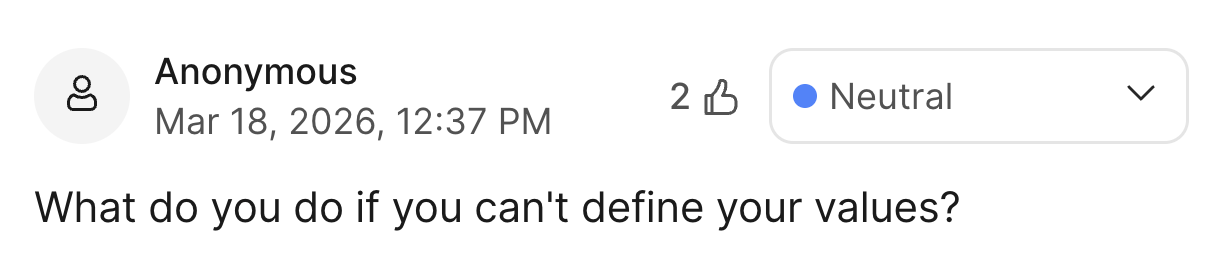
Here’s what I told them. Most people don’t need to find their values. They just need to stop overriding them.
If you’re currently experiencing reduced performance, diminished leadership effectiveness, poor decision making, lowered motivation – keep reading.
These are all signs that your values and your actions are out of alignment. By the end of this post, you’ll have your top four personal values – and a tool to guide every major decision going forward.
I walk through this exact exercise in my keynotes, workshops and in chapter five of my book, The Five Overwhelm Culprits™. It’s one of the most powerful exercises I teach – and today I’m sharing it with you for free.
What Are My Personal Values — And Why Do They Matter?
When you don’t know your values, everything feels harder. Decisions. Boundaries. Even knowing whether you’re in the right room.
Here’s why personal values matter so much as a leader:
They Help You Find Alignment
Values help you figure out the right organization to work for. If you’re an entrepreneur like me, they help you build your business from the inside out. They also make it easier to identify the right people to surround yourself with – personally and professionally.
When the people around you share your values, everything flows more naturally. When they don’t, friction is almost inevitable.
They Make Difficult Decisions So Much Easier
Personal values work like a filter. You run decisions through them. And suddenly it becomes very easy to see whether something is a yes or a no.
Without that filter, every decision carries equal weight. With it, you have a clear framework to guide you – even under pressure.
They Make Boundaries Easier to Set and Hold
When someone asks you to do something that isn’t aligned with your values, saying no becomes a lot less complicated. You’re not saying no to the person. You’re staying true to what matters most to you.
That’s a completely different conversation – and a much easier one to have.
What Are My Personal Values? Here’s How to Actually Find Them
Here’s the thing. You already know your values. You’ve just been overriding them.
Think about the last time you said yes to something and immediately felt a knot in your stomach. Or the last time you made a decision that looked perfectly logical on paper – but felt completely wrong. That feeling? That’s your values trying to get your attention.
The exercise I use starts with a list of 105 potential personal values. I have a free worksheet you can download – link in the show notes. Or if you have a copy of The Five Overwhelm Culprits™, you’ll find the same list in chapter five.
But here’s what I want you to understand before you dive in. The worksheet is just a tool. It’s just a list. The real work is learning how to listen to what already feels aligned — and that’s what we’re going to do right now.
Step 1: Review the List and Note Your Gut Reactions
Go through all 105 values. Your job is to notice which ones give you an immediate, positive reaction. Not which ones you think you should pick. Which ones make you feel a little lit up when you read them.
That reaction is your intuition talking. That’s the one to pay attention to.
A few things to keep in mind before you start:
- There is no right answer. There is no reward for picking correctly the first time.
- Your values today may look very different than they did five or ten years ago. That’s completely normal.
- You are selecting up to four values to use as a North Star — not signing a lifetime contract.
For example: animal rights was once a deeply important value to me. I was vegan for 15 years. It’s not that it stopped mattering – it’s that other values took precedence once I became a parent. Values shift. That’s healthy.
Step 2: Learn to Tell the Difference Between Intuition and Ego
This is the most important part of the whole exercise.
Your intuition’s job is to help you make decisions that are in your best interest. It’s quiet and immediate. It just says: that feels right. You’ll feel it in your gut or your chest before your brain catches up.
Your ego’s job is to keep you safe. It’s loud and logical. It sounds like: but what if that doesn’t make sense? What if my husband doesn’t share that value? What if my parents didn’t raise me to believe that?
When you’re selecting your values, you want to listen to your intuition – that first, quiet pull – before your ego starts making its case.
Go with the first four values you feel an intuitive pull toward. The positive feeling you have before your brain tries to talk you out of it. Those are yours.
Step 3: Pressure Test Your Values With Real Decisions
Once you have your four values, the next step is to pressure test them. Run some real decisions through them and see how it feels.
Here are some examples of decisions you can run through your values:
A potential job opportunity – does it align with what matters most to you? A business or romantic partnership – do this person’s values align with yours? A modification to your schedule – does it protect or compromise what you value most? A boundary you’ve been trying to set – does holding it align with your values?
If the decision flows naturally and easily through your values – you have the right ones. If something feels forced or confusing, go back and revisit. Maybe one of your four isn’t quite right. Maybe there’s a better fit on the list. That’s okay. Adjust and try again.
And remember – you are not committing to these values for life. They will evolve as you do. What feels right today is what matters today.
My personal values are family, career, health and travel. Every major decision I make runs through those four. It doesn’t make decisions effortless – but it makes them so much clearer.
Still Asking ‘What Are My Personal Values?’ Read This
If you’ve been feeling like you don’t know what you value, chances are you do. Your ego has just been louder than your intuition.
Selecting your personal values isn’t about getting it perfect. It’s about giving yourself a North Star. A filter. A framework that makes leading – and living – easier.
You don’t need a gold star for doing it right. You just need to start. And remember – your values will evolve as you do. That’s not a failure. That’s growth.
Download the Free Discover Your Values Worksheet
Ready to identify your top four values today? I created a free worksheet with all 105 values to make this process as easy as possible. No pressure. No right answers. Just you, the list, and your intuition.
To access the Discover Your Values worksheet along with my bonus 5 Year Vision worksheet, check out the box below.
Go Deeper With the Book
Values are just one piece of a much bigger framework. In my book, I dedicate an entire chapter to this exercise – with more context, more examples, and a step-by-step walkthrough to help you apply your values to every area of your life and leadership.
The Five Overwhelm Culprits™: Strategies to Save Your Sanity Without Sacrificing Your Success is available now at your favorite book retailer or at the link below.
This is the book for the high-performing woman who is done making decisions that look right but feel wrong. Get the framework. Find your filter. Lead with clarity.
CLICK FOR TRANSCRIPT
[00:00:00] If you don’t know what you want, or every decision feels harder than it should. Then there’s a good chance that it’s because you don’t know your personal values. This is a question I received during a private event Q&A while we were discussing values. It was, what do you do when you can’t define your values?
And I realize this is actually a really great topic to cover because it’s oftentimes, not that you don’t know what your values are, but that you’re constantly overriding them.
So, if you’re currently struggling with reduced performance, diminish leadership effectiveness, poor decision making, and lowered motivation, then you’re gonna wanna stick around. Because by the end of this episode, you’ll be able to clearly identify your top four personal values and have them as a tool to guide alignment and decisions in your leadership moving forward.
If you’re new here, my name is Corrie LoGiudice, otherwise known as Corrie Lo, and I’m a [00:01:00] professional keynote speaker, facilitator, executive coach, and author who helps leaders transform overwhelm into confident action even in times of crisis.
So here’s the thing, when you don’t know your values, and we’re talking about your personal values, everything feels harder. Decisions, boundaries, even knowing if you’re in the right room.
And the question of how do you select your boundaries came up as part of a workshop audience Q&A, and it was in response to a specific exercise that I shared on determining your values. The exercise itself is so powerful that I share it in my keynotes and workshops as well as in my new book, the Five Overwhelm Culprit™ Strategies to Save Your Sanity Without Sacrificing Your Success.
I also have a free resource to help you with this today too. But first, let’s back this up and talk about why values and leadership are important.
The number one reason that they’re important is because they ultimately help with alignment. They help you figure out the [00:02:00] right organization that you should work for, or if you’re like me and you’re an entrepreneur, how to build your organization based on values.
They also help you identify and align with the right people to surround yourself with, whether that be personally with your friends and your community, or even professionally with the organization that you decide to work for. Or even, professional associations. You wanna make sure you’re surrounding yourself with the right people. That is so much easier to do when those people share the same values as you. Especially if you haven’t been lucky in love, chances are it’s because the people that you’re dating don’t have the same values. But that’s a topic for a completely other video.
Personal values are also the easiest way to make difficult decisions. Because they work like a filter, you end up filtering your decisions through it. And it makes it much, much easier to see with clarity whether or not it should be a yes or a no.
And last but not least, values are one of the easiest ways to set boundaries. [00:03:00] Because if someone’s asking you to do something that is not in alignment with your values, it helps make that decision and make that boundary that much easier to implement.
So, I’d love to know, do you know your core personal values? If so, comment below. I would absolutely love to hear them. I’ll share first. Mine are family, career, health and travel.
All right, so what exactly do we do about figuring out our values?
Most people think that they need to figure out their values, but in reality, you already know them. You’ve just been overriding them. Allow me to explain.
All right, and as I go through this explanation, there’s a link in the show notes for you to download a copy of my Discover Your Values Worksheet, or if you have a copy of my book, the Five Overwhelm Culprits™, you can actually find the same exact list in chapter five.
But the worksheet itself is just a tool. It’s just a list of 105 different values that you could choose from. The real work is learning how to listen to what already feels aligned, and that’s what we’re gonna do today. All right, so on the list you’re [00:04:00] gonna review that 105 potential personal values. And you’re gonna make note of the top four that best apply to you and where you are today. So a few quick disclaimers before you dive into it.
First is, it’s common for this to feel overwhelming because there’s so many to choose from, but there’s no right answer and there’s no reward for selecting right the first time.
And then also note that your values today may be very different than the values you held five or even 10 years ago. It’s natural for your values to shift and change with your life experience.
So for example, for me, at one point in time. Animal rights was a very important value to me, to the point that I lived as a vegan for like 15 years of my life.
It doesn’t mean that animal rights aren’t as important to me today, but I have other values that have taken a precedent since I’ve become a parent. So it is very, very natural for those values to shift and change.
So if you get stuck on what values to select, here’s what you [00:05:00] wanna do first is you’re gonna note which ones upon reading them elicited the first positive thoughts and reaction outta you. The ones that you had a gut feeling that kind of like excitement when you feel that, that’s your intuition talking.
When your brain starts running with other thoughts, like, this value doesn’t work because your husband doesn’t share it, or this value doesn’t work because you know your parents taught you xyz. After just a moment before thinking that it felt aligned a lot of times that’s your ego coming into play.
So let’s talk about the difference between your intuition and your ego. ’cause this is important.
Your intuition, its purpose, is to help you make decisions that are in your best good.
Your ego, on the other hand, is specifically designed to keep you safe.
So there’s a lot of times where your intuition and your ego are in direct conflict with each other.
So what we wanna do with values is we wanna be able to listen to our intuition.
And our [00:06:00] intuition is usually immediate and quiet. It just, “that feels right”. It’s the best way to describe it. Again, it’s that gut feeling.
Your ego is loud and logical. So it’s like, “But what if that doesn’t make any sense?” “But what if your husband gets upset?” Or “What if your parents didn’t teach you to value that?” That’s your ego.
So using this filter, you’re gonna select the top four that make the most sense for you today. Again, we’re not feeling committed to them for life because we can change them at any time. They do evolve. Therefore, “what feels right today?”
And then from there, once you have your values selected, you then from there to kind of pressure test them, run every major decision through them.
So some ideas can include a potential job opportunity or a partnership, whether it be romantic or in business.
It could be some kind of a modification to your schedule or even boundaries. Run a boundary through your values. That should give you a really good idea. And you’ll see too by running some specific [00:07:00] examples through it, how much easier it makes those decisions. ‘ cause it truly does.
So to recap. If you don’t know your values, you’re gonna keep making decisions that feel off, even if they look right on paper. Selecting personal values are an essential leadership skill. And they ultimately allow you to have more aligned positioning within organizations, within communities. They help make your decision making easier, and they also help you set better boundaries.
And remember, you already know your personal values, but it’s common for your ego to override them and drown them out, which makes you feel like you don’t know them. And also the process of selecting your personal values can feel overwhelming if you’re putting undue pressure on yourself to do it perfectly the first time.
Remember, you don’t get a gold star for selecting the right values. You just need to select them to make it easier on yourself to lead and make decisions.
And your values will change over time because you change over time and there’s nothing wrong with that, and it’s perfectly normal and healthy.
So if you’re stuck on selecting your values, and again, I recommend [00:08:00] you select up to four to use as kind of a North star.
But go ahead and go with the first four you feel an intuitive pull towards. Again, alignment like that feels right. Usually you might feel it like in your stomach, sometimes you might feel it in your chest, but ultimately it’s that positive feeling you have before your brain starts trying to talk you out of it.
And then from there you could further pressure test your values by running some common decisions through them to see if they feel aligned and how much easier it makes it for you to make those decisions. If everything flows through and it’s very natural and easy, you know you have the right ones. And remember, you could change your personal values at any time.
So hopefully you found my sharing this today helpful. If you have any questions at all about personal values or maybe you’d like me to answer a question on a topic that we haven’t covered yet. Feel free to comment below because I just may feature it on a future episode. And as I mentioned, I cover personal values in detail with even more strategies in my new book, the Five Overwhelm [00:09:00] Culprits™. Which is now available to purchase either in the show notes or at your favorite book, reseller.
And you could also learn more ways to work with me, either one-on-one through coaching and advisory or with your organization through keynotes and workshops in the show notes as well.
So thank you so much for being here, and I look forward to seeing you on the next episode. I’ll see you then.
Thanks for checking out the next step with Corrie Lo. If this episode resonated with you, share it with a friend, subscribe, and leave a review. Together, we’ll transform overwhelm into action and we’ll keep taking the next step towards confident leadership. See you next time.